

絞りについて What is Shibori
絞りとは
What is Shibori(Tie-dyeing)
布を糸や紐でしっかりと縫ったり、または板などで布を挟んだりすることによって、その部分だけ染料が入らないように染める技法です。縫い方や縛り方・板の挟み方、布の畳み方によって、様々ながらが生まれます。
This method involves sewing or tying the cloth tightly with thread or string, or sandwiching the cloth between boards to prevent dye from entering the area.
Various patterns are created depending on the way the cloth is sewn, tied, sandwiched between boards, and folded.
”絞り染め”は、古くから世界各地で行われてきました。
日本へ伝来したのは、飛鳥・奈良時代頃、シルクロードを渡って仏教などの大陸文化と共に伝わったとされています。
Tie-dyeing has been practiced around the world since ancient times.
It is said to have been introduced to Japan
via the Silk Road in the Asuka and Nara periods.
It seems to have entered Japan at the same time that Buddhism was introduced to Japan from India via China, along with continental culture.
その後日本の産業として浸透し、絞り染めが施された。布は、正倉院に
宝物として保管されている他、数多く残されています。
Later, it penetrated Japan as an industry, and many tie-dyed
cloths have been left behind, including those kept as treasures in
the ”Shosoin” Repository.

有松・鳴海絞
Arimatu and Narumi shibori
”有松・鳴海絞”は、現在の名古屋市緑区鳴海町を中心に
400年程前から始まりました。
比較的近い場所に木綿の産地があったので、木綿が入手しやすく、
絞り染めの浴衣や手ぬぐいなどが盛んに作られました。
“Arimatsu and Narumi shibori” began about 400 years ago
in Narumi-machi, Midori-ku, present-day Nagoya City.
Cotton was easy to obtain because of its relatively close proximity to the cotton producing area,Tie-dyeing of yukata (summer kimonos) and tenugui
(hand towels) flourished.
江戸時代には江戸(東京)と京都を結ぶ街道、”東海道五十三次”が
設けられました。鳴海は40番目の宿場町として栄えました。
上は将軍様、大名から商人、町民に至るまで、あらゆる人たちが行き来しました。
色鮮やかな絞り染めは、行き交う人々の目にも興味深く映り、
手土産として重宝されたそうです。
その繁栄ぶりは安藤広重や葛飾北斎の浮世絵などにも描かれています。
During the Edo period (1603-1867), the “53 Stages of the Tokaido”
Highway connecting Edo(Tokyo) and Kyoto was established.
Narumi flourished as the 40th inn town.
People from all walks of life, from shoguns and feudal lords
to merchants and townspeople, came and went.
Vividly colored tie-dyed fabrics delighted the eyes of passersby,
They were also valued as souvenirs.
Their prosperity is depicted in the ukiyoe woodblock prints of
Hiroshige Ando and Hokusai Katsushika.
日本の他地域でも絞り染めは行われていましたが、
鳴海では絞りについて研究が特に盛んでした。
その甲斐あって産み出された絞りの種類は100種類以上と、
日本のみならず世界的にみても突出した絞りの産地となりました。
Tie-dyeing was practiced throughout Japan.
In Narumi, however, the study of tie-dyeing was particularly active.
Thanks to this, more than 100 types of shibori were produced in Narumi.
Narumi became one of the leading tie-dyeing production centers
not only in Japan but also in the world.

五十三次名所図会鳴海名産有松絞店 安藤広重
Narumi Famous Products Arimatsu Stranded Shop at Fifty-three Shops Chart Association
Hiroshige Ando
絞り染めの工程
Tie-dyeing Process
-
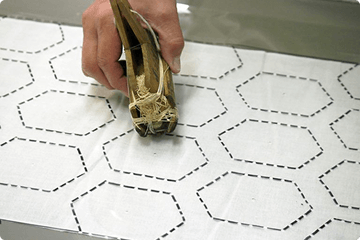
1.デザイン、片堀、絵彫り 1.Design
有松・鳴海絞で表現できるデザインを考えます。
図案をもとに、小刀やハト目抜きなどで穴をあけて型紙をつくります。
刷毛で青花液を刷り込んで図案を写します。 Design a pattern that can be expressed with Shibori.
Based on the pattern, a template is made by punching holes with a small knife or eyelet punch.
A brush is used to print the pattern on the cloth.
-
 2.括り(くくり) 2.Tying
糸と針を使って縫ったり、専用の絞り台を使って
括ります。
他にも、板などではさむ絞り技法もあります。
画像は巻上げ絞りを括る様子です。 It is sewn with a thread and needle, and tied with a special tying base.
In addition, there is also a shibori technique of sandwiching between boards. -
 3.染色 3.Dyeing
有松・鳴海絞で表現できるデザインを考えます。
図案をもとに、小刀やハト目抜きなどで穴をあけて型紙をつくります。
刷毛で青花液を刷り込んで図案を写します。 The dye is changed according to the material,
and dyeing is done with care so that the shibori tying does not come loose.
Some of the shibori may be untied and dyed further. -
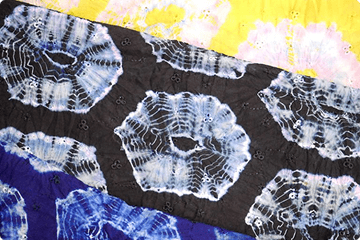 4.糸抜き、仕上げ 4.Thread removal, finishing
絞りの種類によって解き方が異なります。
同じ図案でも、一枚一枚表情が違う絞り染め。
それが魅力のひとつでもあり、難しさでもあります。 The method of solving differs depending on the type of shibori.
Even with the same design, each tie-dye has a different expression.
That is part of its charm, but also part of its difficulty.
絞り技法の紹介
Introduction to the technique of squeezing
-

三浦絞り Miura Shibori
-
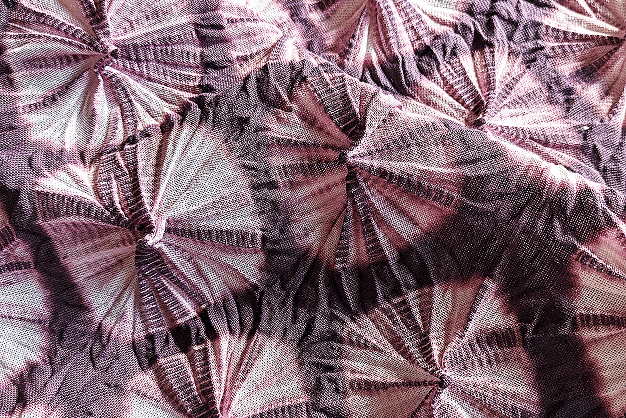
蜘蛛絞り Kumo Shibori
-

竜巻絞り Tatsumaki Shibori
-
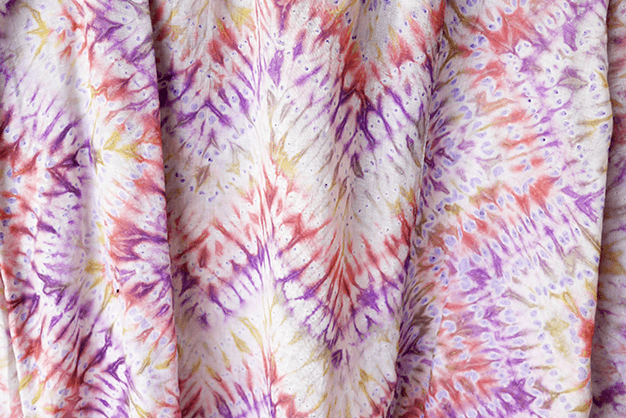
縫い絞り Nui Shibori
-

唐松絞り Karamatsu Shibori
-

雪花絞り Sekka Shibori